

institutional effectiveness
Arlington Baptist University is committed to providing students with a quality Christian education and to continually evaluating how effectively we fulfill our mission. Institutional effectiveness is an ongoing process of assessing student achievement, institutional performance, and educational outcomes. ABU uses these results to identify strengths, recognize opportunities for improvement, guide institutional planning, and support data-informed decision-making. The information below provides key measures of student enrollment, persistence, retention, graduation, and post-graduation outcomes.
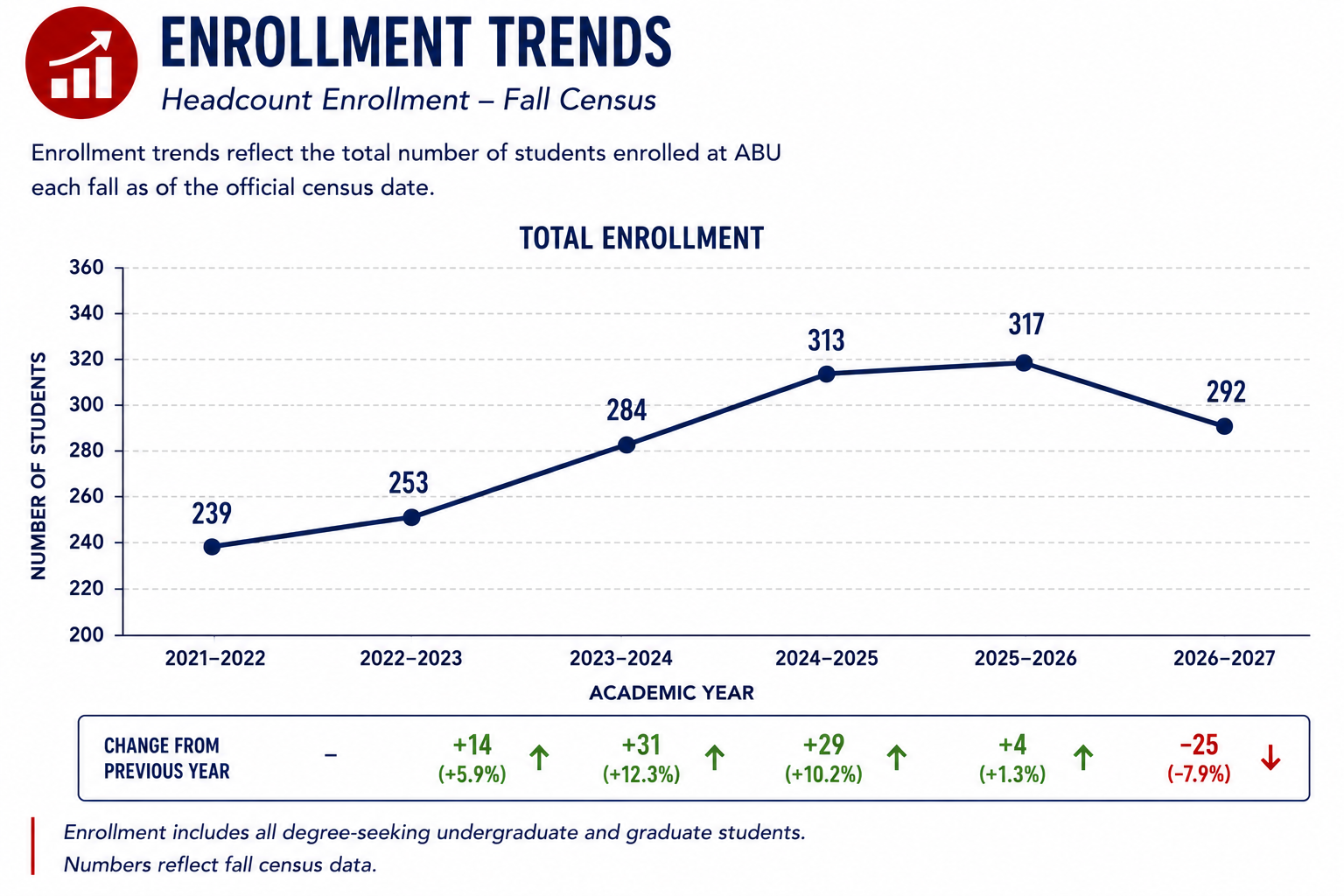
ABU monitors enrollment trends as part of its institutional planning and evaluation process. Enrollment declined through 2020 before beginning a period of significant recovery. From Fall 2020 to Fall 2025, enrollment increased from 160 to 317 students, representing approximately a 98% increase. Fall 2026 enrollment remains substantially above enrollment levels experienced during 2017–2022. Enrollment information is used in institutional planning related to academic programs, student services, facilities, staffing, financial planning, and recruitment.
STUDENT SUCCESS
Student success is measured in several ways. In addition to enrollment, ABU evaluates whether students continue their education from one term to the next, return for subsequent academic years, successfully complete their degrees, and achieve positive outcomes following graduation.
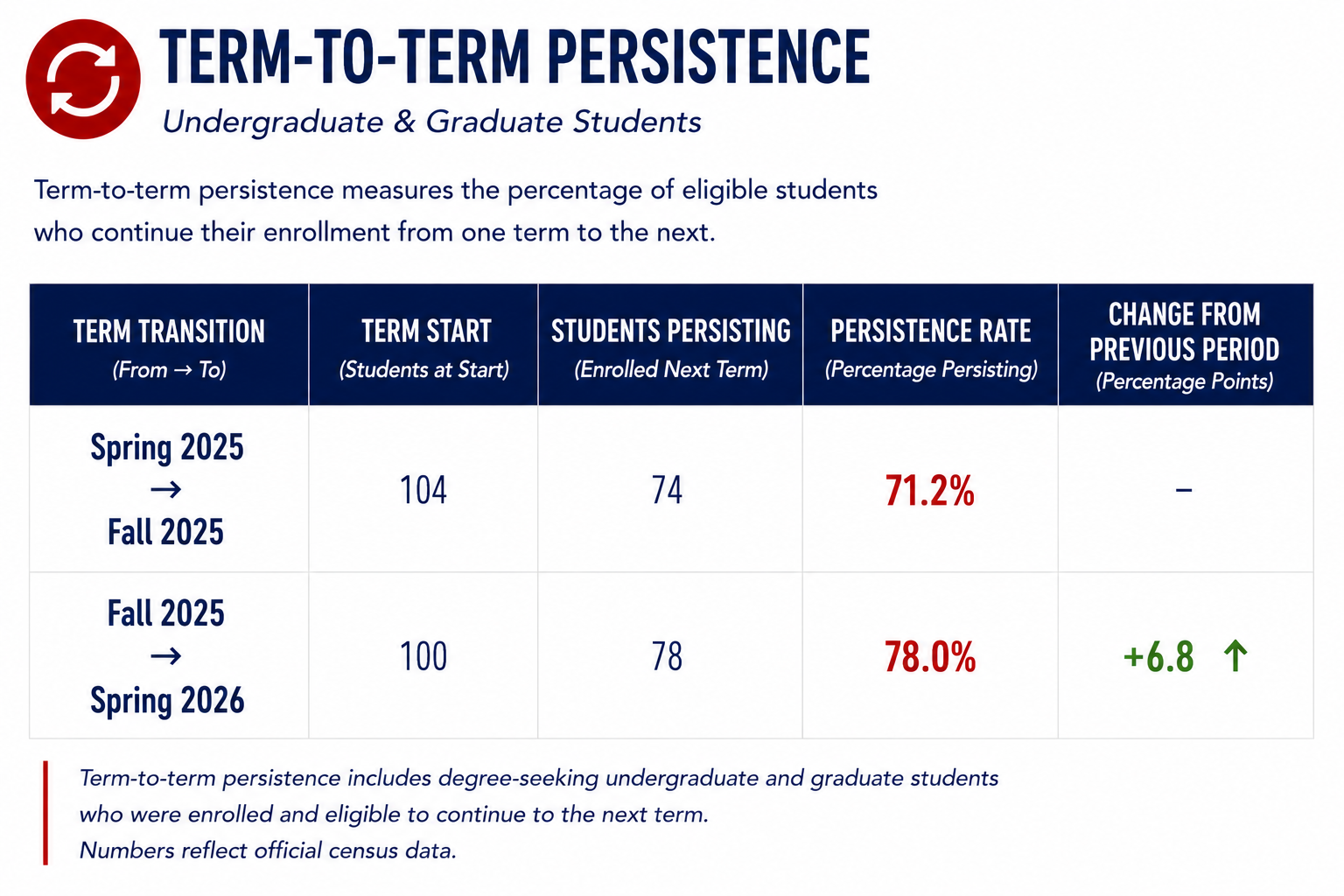
Understanding Persistence
Persistence measures the percentage of eligible students who continue their enrollment from one academic term to the next. ABU's most recent data indicate that 78.0% of eligible Fall 2025 students persisted into Spring 2026. Term-to-term persistence provides ABU with a timely measure of student continuation and allows the University to identify patterns that may affect student success. ABU uses persistence information to evaluate and strengthen academic advising, student support, financial aid counseling, student engagement, and other student-success initiatives.
Student retention & persistence
Arlington Baptist University monitors both student retention and term-to-term persistence to evaluate student continuation and identify opportunities to strengthen student success. Because retention and persistence measure different student populations, ABU reviews both measures as part of its institutional effectiveness process.
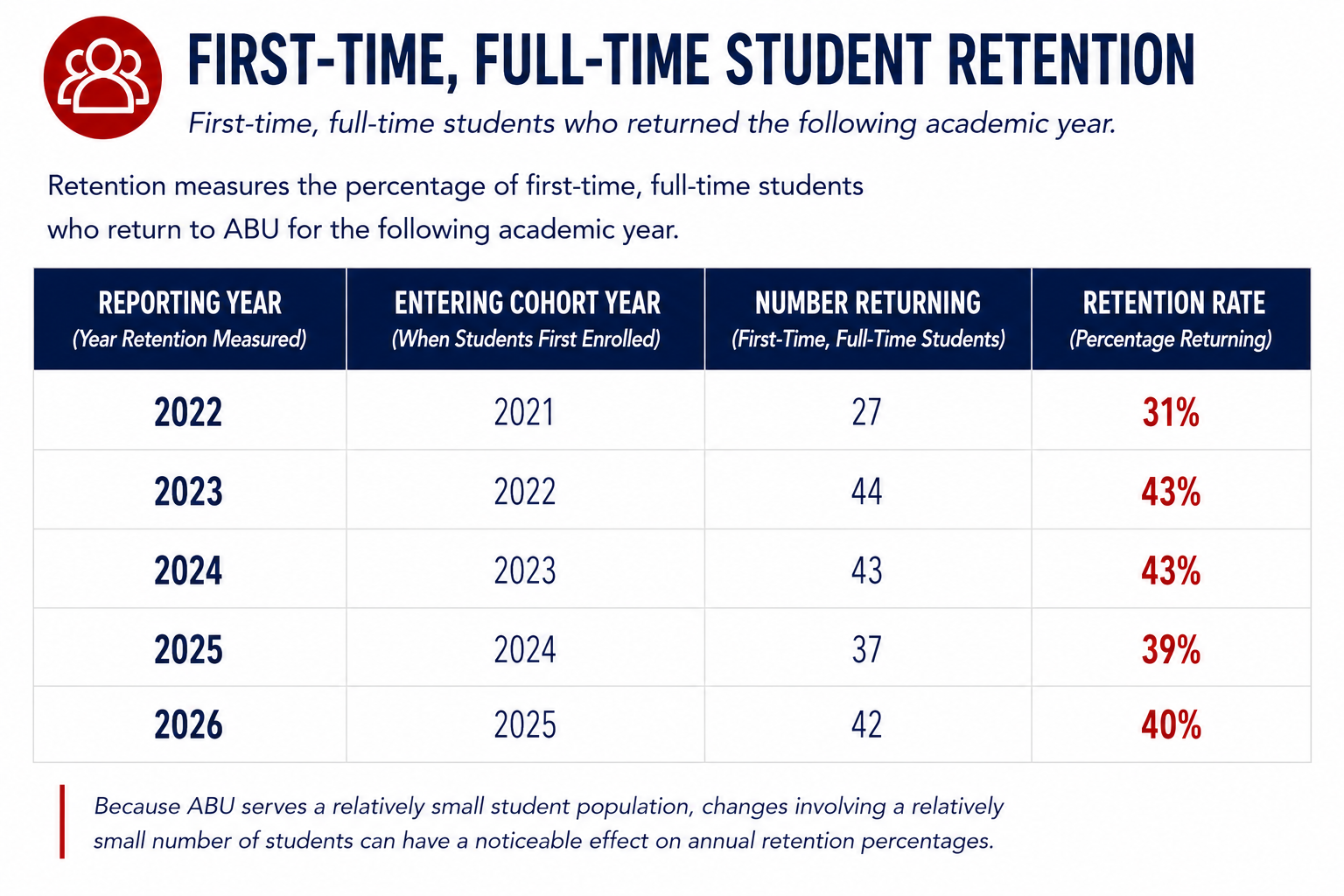
Understanding Retention
Retention measures the percentage of students within a defined entering cohort who return to ABU for the following academic year. The rates presented above reflect ABU's reported first-time, full-time student retention data. Because ABU is a small institution and individual entering cohorts may also be small, changes involving a relatively small number of students can have a noticeable effect on the annual retention percentage. ABU uses retention results to evaluate student achievement and identify areas where additional academic, financial, advising, or student-support initiatives could strengthen student success.
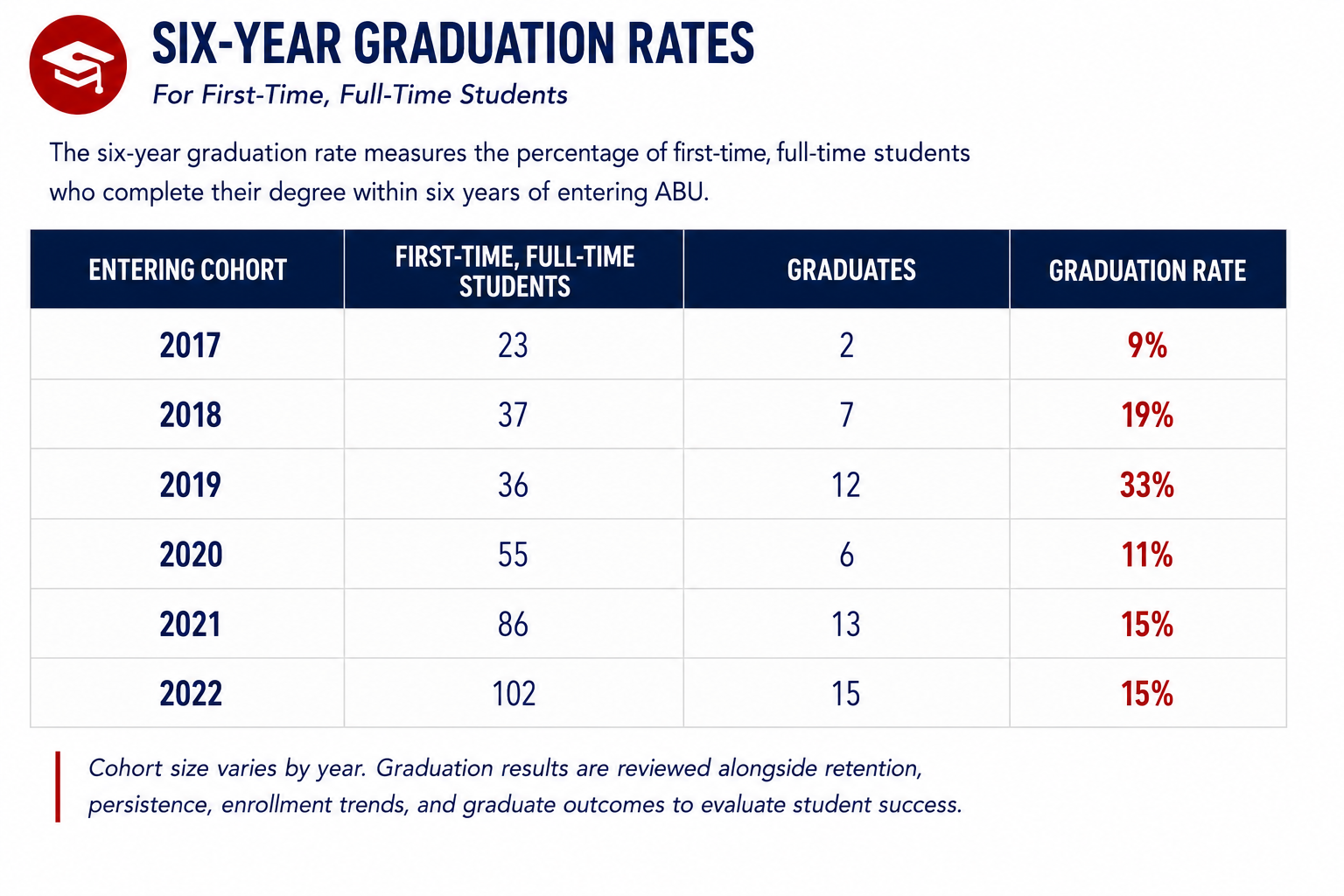
Understanding Graduation Rates
The six-year graduation rate measures the percentage of first-time, full-time bachelor's degree-seeking students who complete their degree within 150% of the normal time required for completion. For a traditional four-year bachelor's degree, this represents completion within six years. ABU serves a relatively small student population, and individual first-time, full-time entering cohorts may also be small. As a result, the graduation or non-completion of a relatively small number of students can substantially affect the reported percentage for a particular cohort. For this reason, ABU evaluates graduation rates alongside additional measures of student achievement, including persistence, retention, enrollment patterns, and post-graduation outcomes.
Graduate Outcomes
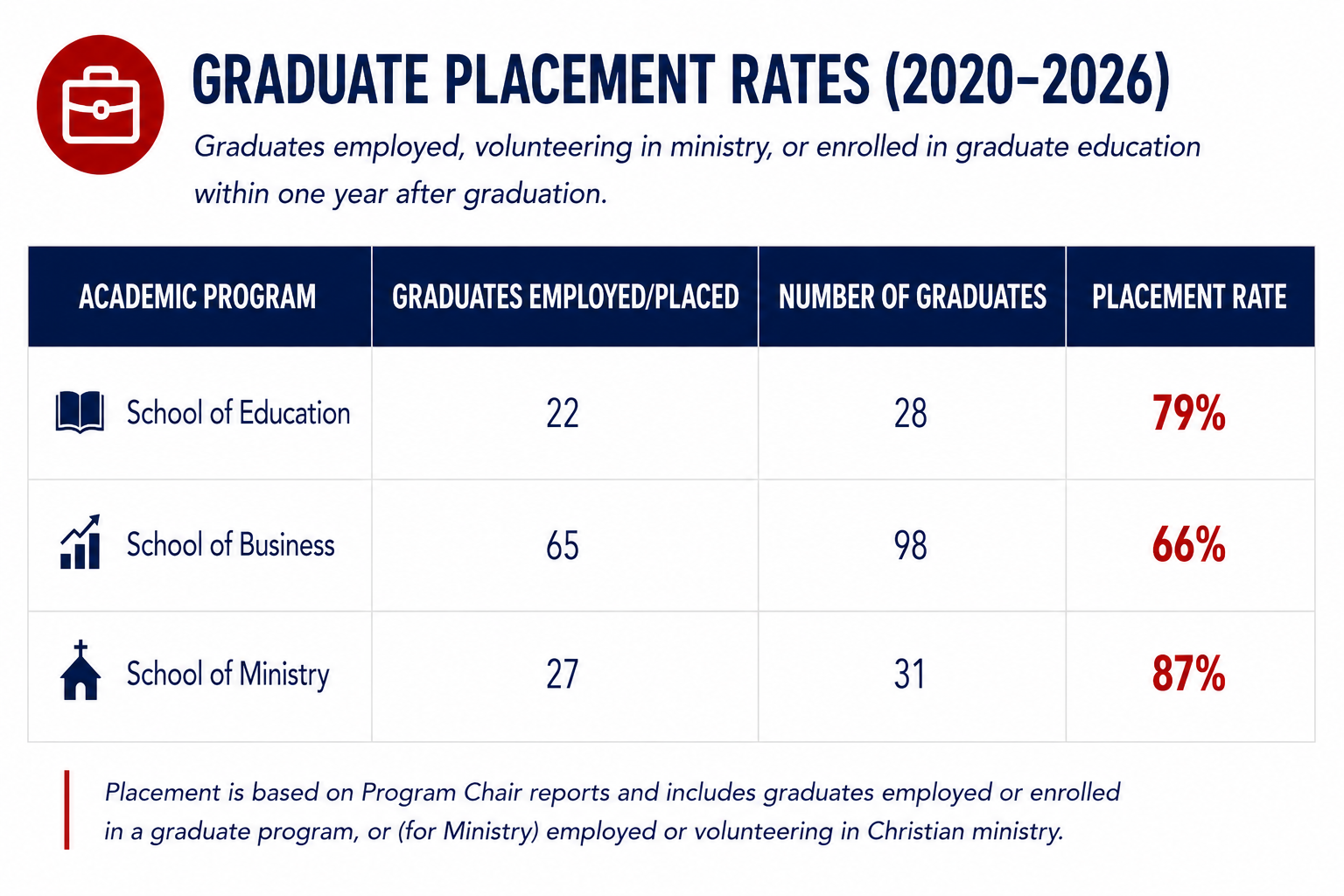
understanding Placement
ABU evaluates graduate outcomes to determine whether students are successfully transitioning from their academic programs into employment, ministry service, or continued education. For Education and Business graduates, placement generally includes those employed or enrolled in graduate education within one year of graduation. For Ministry graduates, placement also recognizes those employed or actively serving in qualifying Christian ministry roles. Graduate outcome information helps ABU evaluate the effectiveness and relevance of its academic programs and informs program review, curriculum development, and institutional planning.
How ABU Uses Institutional Effectiveness Data
Institutional effectiveness at Arlington Baptist University is more than reporting statistics. Assessment results are used to support continuous institutional improvement.
ABU reviews student achievement and institutional performance information as part of:
Strategic and institutional planning
Academic program review
Assessment of student learning
Enrollment management
Student retention and persistence initiatives
Academic advising and student support
Financial and resource planning
Faculty and staff planning
Accreditation and regulatory reporting
Institutional leaders, faculty, and staff use these findings to identify areas of strength, establish priorities for improvement, and evaluate whether institutional initiatives are producing the intended results.
Understanding Our Measures
Because different measures examine different groups of students, percentages presented on this page should not necessarily be compared directly with one another.
Enrollment
The number of students enrolled during a designated reporting period.
Persistence
The percentage of eligible students who continue enrollment from one academic term to the next.
Retention
The percentage of students within a defined entering cohort who return for the following academic year.
Graduation Rate
The percentage of students within a defined entering cohort who complete their degree within the specified reporting period.
Placement Rate
The percentage of graduates identified as employed, continuing their education, or meeting other established program-specific placement criteria within the defined reporting period.